Cicaplast Balm B5+
Three laser sessions, three approaches to recovery, and very little difference between them.
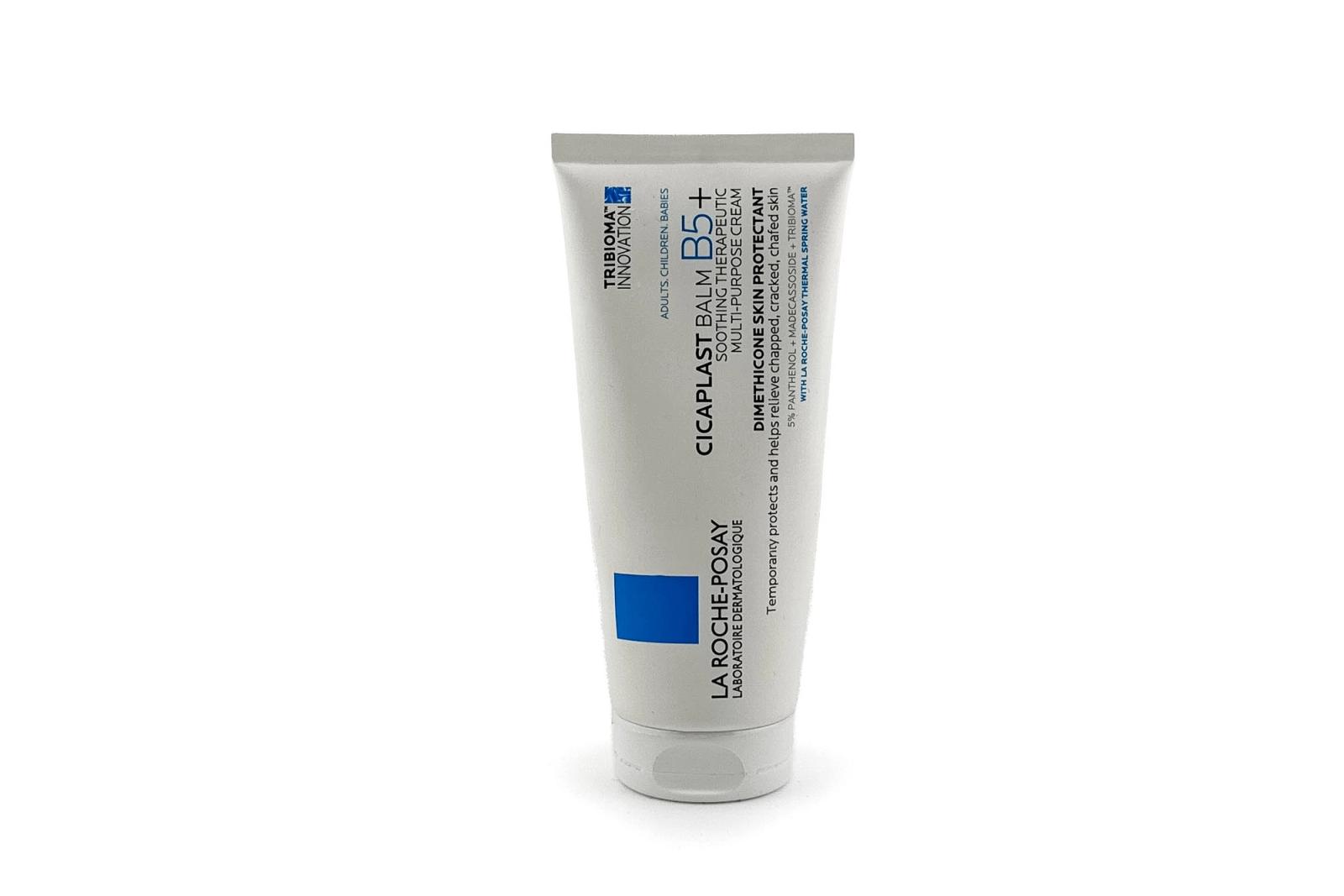
I purchased this product with my own money from cvs.com.
The Backstory
Spend enough time reading skincare recommendations online and you’ll eventually be told to buy Cicaplast. It’s practically compulsory whenever someone mentions a damaged skin barrier.
My barrier has always been fairly resilient. I don’t think I’ve ever managed to damage it, despite giving it plenty of opportunities. So I never felt much urgency to try the stuff.
That changed when I started laser treatments for acne scarring. After my first session, the clinic had me purchase ALASTIN Regenerating Skin Nectar, a $265 serum marketed specifically for use around cosmetic procedures.1Regenerating Skin Nectar with TriHex+, ALASTIN Skincare
I wasn’t particularly fond of it. The formula is very silicone-heavy, and while I understand the appeal of that protective, smoothing texture, I didn’t enjoy how it felt on my skin. Layering other products over it was annoying, too.
My recovery, however, went well. Within about three days, the redness had subsided, leaving only a little mild bronzing.
With two sessions remaining, I decided to try something different. Cicaplast was considerably cheaper, had an enormous following, and seemed like a reasonable alternative to a product I hadn’t particularly enjoyed using.
Formula & Claims
La Roche-Posay positions Cicaplast Balm B5+ as a multipurpose treatment for dry, irritated skin, designed to soothe discomfort, protect the skin barrier, and support recovery.2Cicaplast Balm B5+ Soothing Therapeutic Multi-Purpose Cream, La Roche-Posay
Its formula centers on 5% panthenol, or provitamin B5, alongside madecassoside and Centella asiatica extract. Glycerin provides hydration, while shea butter, hydrogenated polyisobutene, and dimethicone contribute to its rich, protective texture. The formula also contains Tribioma, the brand’s proprietary prebiotic complex.2Cicaplast Balm B5+ Soothing Therapeutic Multi-Purpose Cream, La Roche-Posay
I was skeptical that anything here would make a dramatic difference. Not because the ingredients are ineffective, but because they’re so familiar.
I remember vitamin B5 being advertised in drugstore creams when I was a child in the 1990s. Centella has since become a fixture of Korean skincare, while botanical brands often prefer its more romantic name, gotu kola. It’s the same plant, enjoying several different marketing careers.
Panthenol is a useful moisturizer with soothing properties. Madecassoside and centella have research supporting their potential to calm irritation and assist skin recovery. Dimethicone is an established skin protectant. The combination makes sense for a product intended to keep compromised skin comfortable.
It’s a sensible formula, although nothing about it suggested I should expect a dramatically faster recovery.
The Experience
After my second laser session, I applied Cicaplast morning and night in place of the ALASTIN serum.
Within roughly three days, my skin looked much as it had after the first treatment. The redness had settled, with a little residual bronzing. I couldn’t identify a meaningful difference in recovery.
I was pleased, but also slightly annoyed. A relatively inexpensive pharmacy balm had performed just as well, at least to my eyes, as the $265 serum I’d been sent home with after my first session.
I still had one laser treatment remaining, so I decided to try a third approach.
This time, I skipped both products and relied on my usual botanical oils and rich night creams, including some marketed for skin recovery. Products I already owned, enjoyed using, and knew my skin tolerated well.
The outcome was much the same.
Across three sessions, I recovered at roughly the same pace regardless of whether I used ALASTIN, Cicaplast, or my regular skincare. My skin is fairly resilient, and the treatments weren’t identical, but I saw no convincing advantage in recovery speed from either specialized product.
Keeping my skin moisturized and comfortable seemed to be doing most of the work.
Cicaplast itself is rich, occlusive, and thoroughly unexciting. It leaves a substantial protective layer, and its texture is more practical than pleasurable. I didn’t find myself looking forward to applying it, although I appreciated having something straightforward to use while my skin recovered.
Final Words
I understand Cicaplast’s popularity. It’s affordable, uncomplicated, and well suited to people who want a dependable balm for irritated or sensitive skin. Sometimes a rich, boring cream is exactly what’s needed.
For me, though, it doesn’t offer much beyond what I already have. My regular creams and oils kept my skin just as comfortable during recovery, and I enjoy using them considerably more.
The experiment also left me questioning the value of ALASTIN Regenerating Skin Nectar, particularly given its price and a texture I never liked. I had no reason to return to it, but Cicaplast didn’t become a new favorite either.
I’ll keep the tube around for the occasional irritated patch, a break from my usual routine, or practical little problems on my neck and body. Places that need looking after but don’t necessarily deserve Chanel.
Sources
- Regenerating Skin Nectar with TriHex+, ALASTIN Skincare.
- Cicaplast Balm B5+ Soothing Therapeutic Multi-Purpose Cream, La Roche-Posay.